
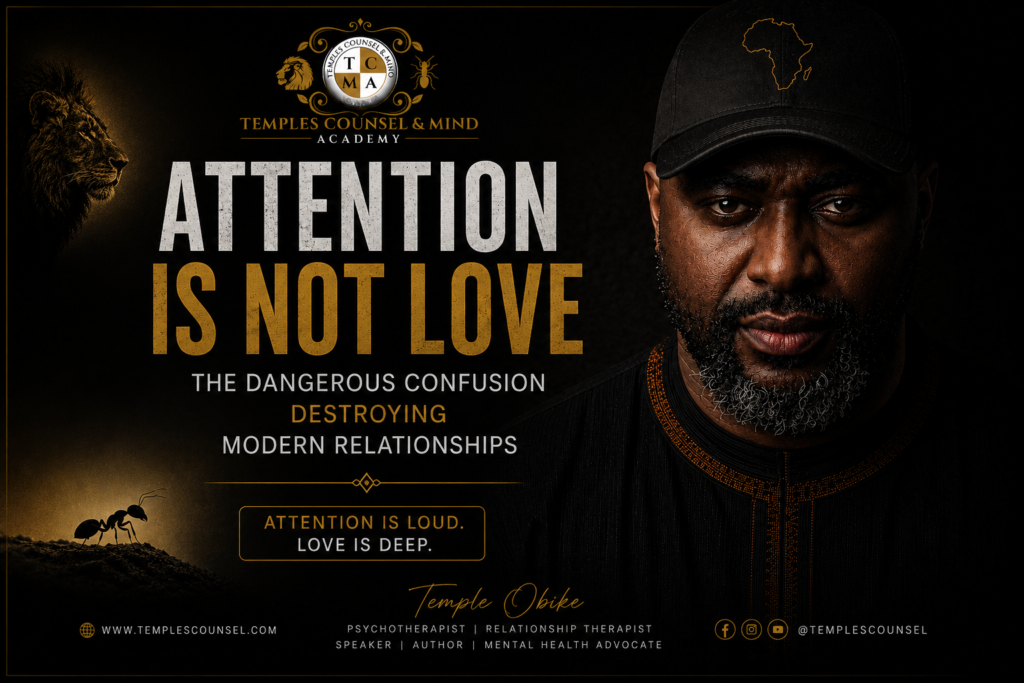
Attention is not love. If, while reading the first article, you found yourself becoming defensive, irritated, uncomfortable, or quietly trying to explain away your behaviour, there is a possibility that this conversation is not about your spouse at all.
It may be about you.
One of the greatest obstacles to personal growth is the tendency to focus on whether an observation sounds harsh rather than whether it is true. Human beings are remarkably skilled at defending behaviours they have not yet fully understood. We tell ourselves that we are simply expressive, social, confident, outgoing, or enjoying life. Sometimes those explanations are accurate. Sometimes they are carefully constructed stories designed to protect us from a more uncomfortable reality.
The question is not whether you post photographs. The question is not whether you enjoy compliments from old schoolmates, new online friends or from random strangers. The question is not even whether people find you attractive.
The real question is this: Why does it matter so much or why is it starting to matter so much?
That is where healing begins.
Most unhealthy validation-seeking behaviour is not born from confidence. It is born from a wound. Somewhere along the journey, many people unknowingly developed an emotional dependence on being noticed. For some, it began in childhood where achievement earned attention but emotional needs were ignored. For others, it emerged from rejection, betrayal, abandonment, bullying, criticism, or years of feeling invisible. The individual discovers that admiration provides temporary relief and unconsciously begins pursuing it whenever emotional discomfort appears.
The tragedy is that validation feels like healing without actually being healing. It resembles emotional nourishment while quietly creating emotional dependence. Every compliment works for a few moments. Every message provides a brief emotional lift. Every reaction creates a small sense of significance. Then the feeling fades and the search begins again. This is why validation addiction behaves very similarly to other forms of dependency. The dosage must increase because the effect never lasts.
The first step towards recovery is radical honesty. Not honesty with your spouse. Not honesty with your friends. Honesty with yourself. You must become willing to sit with uncomfortable questions without immediately defending yourself. What emotion am I chasing when I post certain content? What emotion am I avoiding? Why does admiration from strangers affect me so deeply? What happens inside me when nobody notices me? What fear emerges when I am not receiving attention?
Many people discover something surprising at this stage. Beneath the desire for attention is often a fear of insignificance. Beneath the desire to be desired is often a fear of being forgotten. Beneath the need to be admired is often a belief that personal worth is tied to external approval. These discoveries can be painful, but they are also liberating because problems cannot be solved until they are accurately identified.
The second step is learning to separate self-worth from visibility. Modern culture has convinced many people that being seen is the same as being valuable. It is not. Visibility is public. Value is personal. Visibility depends on algorithms. Value depends on character. Visibility can be taken away overnight. Value remains when the applause ends. The healthiest individuals are those who know who they are even when nobody is watching.
The third step involves rebuilding intimacy with reality. Many people spend years managing perceptions while neglecting genuine connection. They become experts at attracting attention and novices at receiving love. They know how to impress people but struggle to be emotionally known. Recovery requires reversing that pattern. It means investing more energy into meaningful relationships than into personal presentation. It means becoming more interested in connection than admiration.
If you are married, an important question must be asked. Does your online behaviour strengthen trust or quietly compete with it? Every action communicates a message. Every post tells a story. Every interaction reveals a priority. Healthy marriages are built when both partners become intentional guardians of emotional safety. Not because they are controlled, but because they understand that trust is fragile and worth protecting.
This journey is not about becoming invisible. It is not about abandoning social media. It is not about suppressing confidence or pretending attractiveness does not exist. It is about freedom. Freedom from needing strangers to tell you who you are. Freedom from performing for an audience. Freedom from measuring your value through reactions, comments, and approval. The healthiest version of you is not the version that attracts the most attention. It is the version that remains secure even when attention disappears.
The goal is not fewer likes or attention.
The goal is less or no dependence on them.
For deeper guidance, emotional healing, relationship support, and structured personal development programmes, consider working with a qualified therapist or coach who can help uncover the roots of validation dependency and rebuild healthier patterns of self-worth.
Written by Temple Obike
Psychotherapist, Relationship Therapist, Founder of Temples Counsel & Mind Academy, and advocate for healthier relationships, emotional intelligence, and family systems across Africa. https://www.instagram.com/templescounsel/