
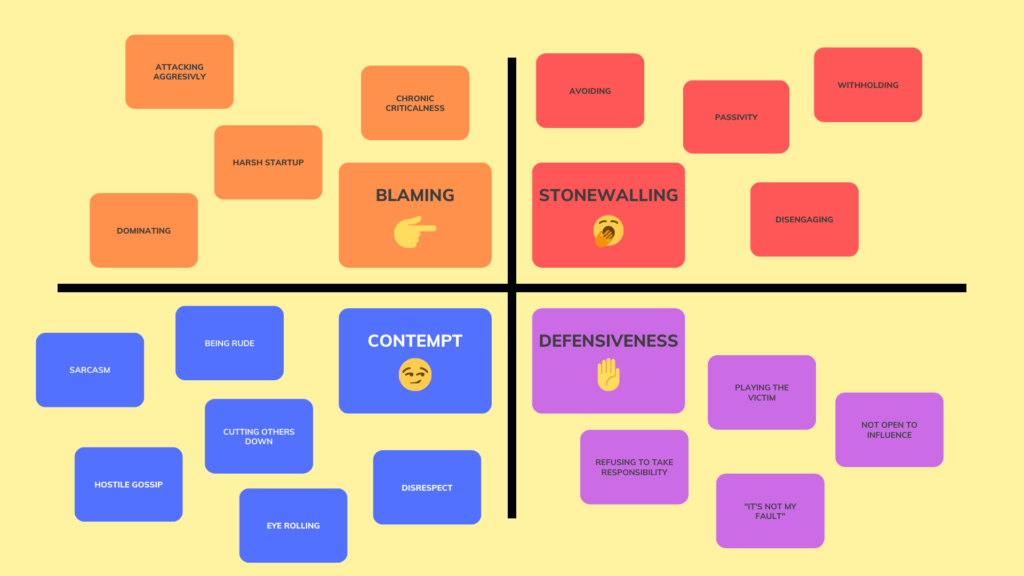
The 4 Toxic Communication Patterns; Criticism, Contempt, Defensiveness, Stonewalling: with Real-Life Examples
When John Gottman studied relationships, he identified four communication patterns that consistently predict relationship breakdown.
He called them the Four Horsemen:
-
Criticism
-
Contempt
-
Defensiveness
-
Stonewalling
Most people think these are “big problems.”
They’re not.
They’re small daily habits that quietly destroy connection over time.
Let’s break them down with real-life examples so you can recognize them in your own relationship.
1. Criticism: Attacking the Person, Not the Problem
What it looks like:
Instead of addressing an issue, you attack your partner’s character.
Real-life example:
“You never help around the house. You’re just lazy.”
The real issue might be:
-
You feel overwhelmed
-
You need support
But instead of expressing that, it turns into a personal attack.
Healthier alternative:
“I’ve been feeling stressed doing everything alone. Can we share responsibilities better?”
👉 Criticism says: “You are the problem.”
👉 Healthy communication says: “This situation is the problem.”
2. Contempt: The Most Dangerous One
Contempt is criticism with disrespect, superiority, or disgust.
It’s the fastest predictor of relationship breakdown.
Real-life examples:
-
Eye-rolling during conversations
-
Mocking your partner’s opinions
-
Sarcastic comments like:
“Wow, that’s the best you could come up with?”
-
Calling names or belittling
Example in context:
Partner A: “I had a tough day at work.”
Partner B: “You? Tough day? You don’t even do anything serious.”
This doesn’t just hurt, it erodes emotional safety.
👉 Contempt says: “I’m better than you.”
3. Defensiveness: Refusing Responsibility
Defensiveness is often a reaction to criticism, but it makes things worse.
Instead of listening, you:
-
Make excuses
-
Shift blame
-
Play the victim
Real-life example:
Partner A: “You forgot to call me like you promised.”
Partner B: “Well, you didn’t remind me! And I’ve been busy all day!”
Now the issue is lost.
The conversation becomes a blame game.
Healthier alternative:
“You’re right, I forgot. I’ll do better next time.”
👉 Defensiveness says: “It’s not my fault.”
👉 Growth says: “I can take responsibility.”
4. Stonewalling: Shutting Down Completely
This happens when one partner emotionally withdraws.
They stop responding, engaging, or even looking at you.
Real-life examples:
-
Walking away mid-conversation
-
Giving silent treatment
-
Saying “I’m done” and refusing to talk
-
Nodding without actually listening
Example in context:
Partner A: “Can we talk about what happened?”
Partner B: (silence… scrolling phone… no response)
This leaves the other person feeling:
-
Ignored
-
Unimportant
-
Alone
👉 Stonewalling says: “I’m not engaging with you.”
Why These Patterns Are So Dangerous
Individually, they seem small.
But over time, they create:
-
Emotional distance
-
Resentment
-
Loss of trust
-
Communication breakdown
Most couples don’t break up because of one big issue, they break down because of repeated negative patterns like these.
The Good News: These Patterns Can Be Replaced
Each of these behaviors has a healthier alternative:
-
Criticism → Gentle start-ups
-
Contempt → Appreciation & respect
-
Defensiveness → Responsibility
-
Stonewalling → Emotional regulation & re-engagement
But here’s the truth most people don’t realize:
👉 Knowing this is not enough
👉 You need a structured way to unlearn and replace these habits
Ready to Fix This Pattern in Your Relationship?
If you saw yourself in any of these, criticism, contempt, defensiveness, or stonewalling, here’s the truth:
Reading about it won’t change your relationship.
Awareness is the first step… but transformation requires a system.
That’s exactly why we created the OBIKE Relationship Model Program.
This is not therapy.
This is not generic advice.
It’s a step-by-step framework designed to help you:
-
Identify the exact patterns damaging your relationship
-
Break unhealthy communication cycles quickly
-
Rebuild respect, trust, and emotional connection
-
Replace toxic reactions with proven relational skills
Most people stay stuck because they don’t know how to change what they’re doing in real time.
This program shows you exactly what to do, practically, not theoretically.
🚀 If You’re Serious About Fixing Your Relationship:
Don’t wait until these patterns become permanent.
👉 Join the OBIKE Relationship Model Program today
👉 Start applying the framework immediately
👉 Begin seeing real change in how you and your partner relate
Because the difference between a failing relationship and a thriving one is not luck, It’s what you consistently do differently.
Final Thought
If you recognized even one of these patterns in your relationship, don’t ignore it.
These habits don’t fix themselves, they intensify over time.
The earlier you address them, the easier it is to rebuild:
-
Trust
-
Respect
-
Emotional connection