Burnout vs Stress: Understanding the Difference
Stress and burnout are words people often use interchangeably. Someone may say, “I am stressed,” when they are exhausted, emotionally drained, or simply tired of dealing with everyday responsibilities. While stress and burnout can feel similar, they are not the same experience.
Understanding the difference matters because the way we respond to ordinary stress may not be enough when we are experiencing burnout. Recognizing the signs early can help a person make appropriate changes, seek support, and protect their emotional and physical well-being.
What Is Stress?
Stress is the body’s natural response to pressure, demands, or situations that feel challenging. It can happen when you have too much work, financial concerns, relationship difficulties, family responsibilities, academic pressure, or major changes in your life.
A certain amount of stress is normal. In some situations, it can even motivate you to take action. For example, an upcoming deadline may encourage you to concentrate and complete an important task.
Stress often develops around a specific situation or problem. Once that situation improves, the stress may also decrease.
Common signs of stress include:
- Feeling tense or restless
- Worrying frequently
- Difficulty concentrating
- Headaches or muscle tension
- Changes in sleep
- Feeling overwhelmed
- Increased irritability
- Racing thoughts
- Changes in appetite
- Feeling under pressure
Stress does not necessarily mean that something is seriously wrong. Sometimes, it is simply your body’s response to demanding circumstances.
What Is Burnout?
Burnout is a state of prolonged physical and emotional exhaustion that can develop after a person has experienced ongoing stress, particularly when they feel unable to change or escape the source of that stress.
Burnout is often associated with work, but it is not limited to employment. Students, caregivers, parents, entrepreneurs, healthcare workers, volunteers, and people dealing with prolonged relationship or family responsibilities can also experience burnout.
A person experiencing burnout may feel that they have nothing left to give.
Instead of thinking, “I have too much to do,” they may begin thinking, “I cannot do this anymore.”
Burnout can involve:
- Persistent exhaustion
- Emotional detachment
- Loss of motivation
- Cynicism or negativity
- Reduced productivity
- Difficulty concentrating
- Feeling ineffective
- Becoming easily frustrated
- Losing interest in activities once enjoyed
- Feeling disconnected from other people
Unlike temporary stress, burnout can affect how a person feels about their responsibilities, relationships, and even themselves.
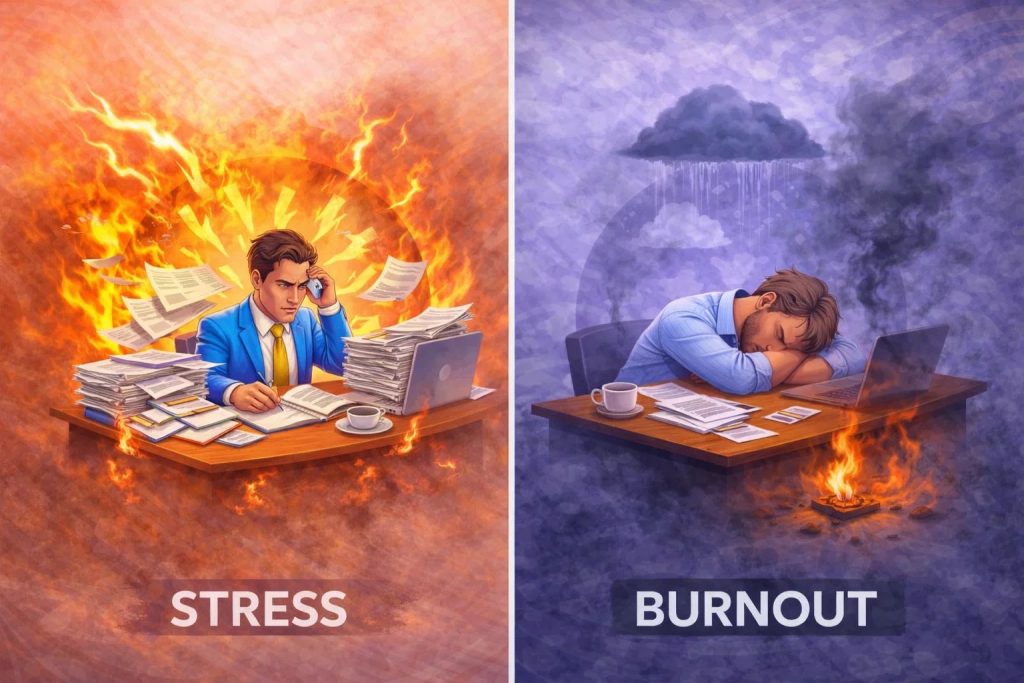
Stress and Burnout: What Is the Difference?
Although stress and burnout can overlap, there are important differences.
1. Stress Can Feel Like Too Much; Burnout Can Feel Like Nothing Is Left
When someone is stressed, they may feel overwhelmed because there are too many demands.
A burned-out person may feel emotionally empty or completely depleted. The problem is no longer simply having too much to do. They may feel that they no longer have the energy or motivation to respond.
2. Stress Is Often Connected to Pressure
Stress usually has an identifiable source.
For example, you may be stressed because you have several assignments due, an important presentation approaching, or financial responsibilities that need immediate attention.
Burnout tends to develop through prolonged exposure to stress. Over time, the person may become exhausted by constantly trying to manage the pressure.
3. Stress May Improve When the Situation Changes
Taking a break, completing a major task, resolving a conflict, or getting enough sleep may reduce ordinary stress.
Burnout can be more persistent. Even after taking a short break, a person may continue to feel exhausted, detached, or unmotivated.
4. Stress Can Increase Activity; Burnout Can Reduce It
A stressed person may rush around trying to solve every problem.
Someone experiencing burnout may stop caring about solving the problems altogether.
They might procrastinate, withdraw from responsibilities, avoid communication, or struggle to begin even simple tasks.
5. Burnout Can Change How You See Yourself
Long-term stress can be exhausting, but burnout may also affect a person’s sense of effectiveness and identity.
Someone who once felt capable and enthusiastic may begin to think:
“I’m not good at this.”
“Nothing I do matters.”
“I cannot keep up.”
“I don’t care anymore.”
These thoughts can make recovery more difficult if they continue unchecked.
Can Stress Lead to Burnout?
Yes. Prolonged or poorly managed stress can contribute to burnout.
Imagine a person who works long hours every day. At first, they feel stressed but believe they can manage it. They begin sleeping less, skipping meals, cancelling social activities, and working through weekends.
After several months, the exhaustion becomes constant. They lose enthusiasm for their work and become increasingly frustrated with colleagues and clients.
Eventually, they may dread starting each day.
The situation has moved beyond an occasional stressful period. Persistent demands without adequate recovery can contribute to burnout.
However, not everyone who experiences stress will develop burnout. Personal circumstances, available support, workload, coping strategies, rest, and the duration of the stress can all influence how someone responds.
Why Do People Ignore the Signs?
One reason burnout can become severe is that people often normalize exhaustion.
In many environments, being constantly busy is treated as evidence of ambition. People may feel proud of sleeping only a few hours, working through weekends, or answering messages at all hours.
Others may believe they simply need to “push harder.”
This mindset can make it difficult to recognize when normal effort has turned into unhealthy exhaustion.
People may also ignore warning signs because they have financial responsibilities, family expectations, academic goals, or workplace demands.
The reality is that ignoring exhaustion does not necessarily make the underlying problem disappear.
How Can You Manage Stress?
If you are experiencing temporary or manageable stress, several practical strategies may help.
Identify the Source
Ask yourself what is creating the pressure.
Is it your workload? Money? A relationship? Family responsibilities? Lack of sleep? Too many commitments?
Naming the source can make a problem easier to understand.
Prioritize Your Responsibilities
Not everything requires immediate attention.
Create a realistic list and distinguish between what is urgent, what is important, and what can wait.
Take Meaningful Breaks
A break should provide genuine recovery rather than simply replacing one source of stimulation with another.
A short walk, quiet time, conversation with someone you trust, exercise, or adequate sleep may help your body and mind recover.
Protect Your Sleep
Poor sleep can make it more difficult to manage pressure. Establishing a consistent sleep routine can support emotional regulation and concentration.
Talk to Someone
You do not have to manage every stressful situation alone. Speaking with a trusted friend, family member, mentor, counselor, or mental-health professional can provide perspective and support.
What Can Help When You Are Experiencing Burnout?
Burnout may require more than simply taking one evening off.
Start by acknowledging that something needs to change.
Look at the demands placed on you and consider whether they are sustainable. Where possible, reduce unnecessary commitments, establish boundaries, delegate responsibilities, and create genuine opportunities for recovery.
It can also be helpful to examine the beliefs that keep you constantly working.
Do you feel guilty when resting?
Is being productive something you feel you must always maintain?
When problems arise, do you feel responsible for solving everyone’s problems?
Finding it difficult to say no, even when you want to?
These patterns can contribute to chronic exhaustion.
Professional counseling can also provide a safe space to explore these issues and develop healthier ways of responding to pressure.
When Should You Seek Professional Help?
Feeling stressed occasionally is a normal part of life. However, persistent emotional or physical exhaustion deserves attention.
Consider speaking with a qualified mental-health professional if exhaustion, anxiety, low motivation, emotional withdrawal, sleep difficulties, or feelings of hopelessness persist or begin interfering with your daily life.
Professional support can help you understand what you are experiencing and identify appropriate strategies for moving forward.
If you ever feel that you may harm yourself or that you cannot keep yourself safe, seek immediate help from emergency services or a crisis-support service available in your location.
Final Thoughts
Stress and burnout may look similar from the outside, but they are different experiences.
Stress is often connected to pressure and can decrease when the situation is resolved or when adequate recovery becomes possible. Burnout generally develops through prolonged, unmanaged stress and may involve deep exhaustion, emotional detachment, and a reduced sense of effectiveness.
The goal should not be to eliminate every stressful experience from life. Some pressure is unavoidable. Instead, it is important to recognize when pressure has become persistent and when your usual coping strategies are no longer enough.
Rest is not laziness. Asking for help is not failure. And recognizing that something needs to change can be an important step toward protecting your well-being.
Understanding the difference between stress and burnout gives you a better opportunity to respond before exhaustion becomes your normal way of living.