
How Cognitive Behavioral Therapy Helps Change Thinking Patterns
The way people think can strongly influence how they feel and behave. A stressful situation, for example, may trigger thoughts such as “I cannot handle this,” “Everything will go wrong,” or “Nobody understands me.” When these thoughts become frequent, they can affect emotions, relationships, confidence, and everyday decisions.
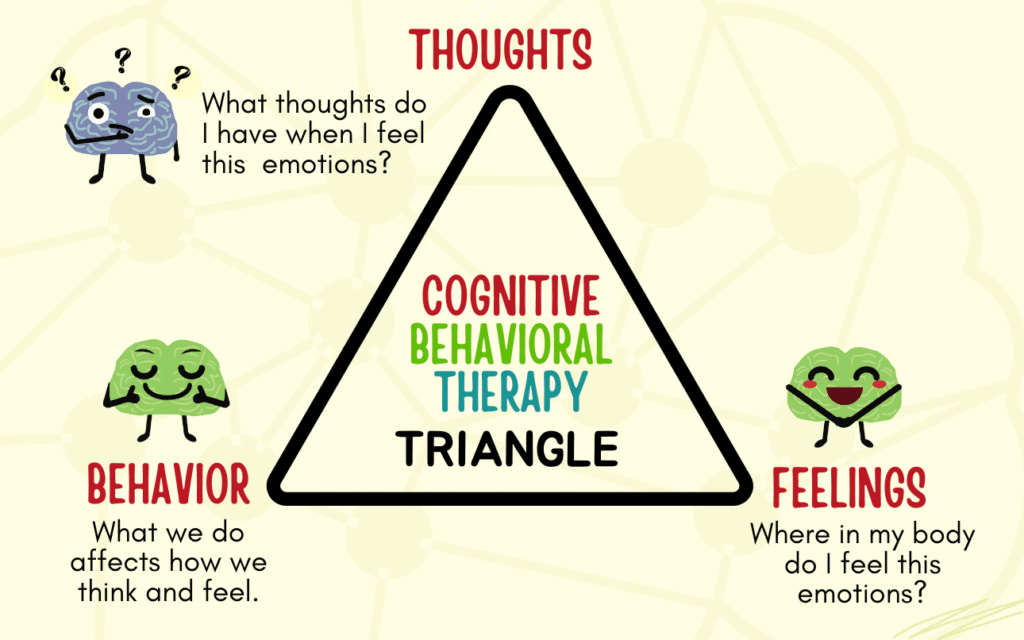
Cognitive Behavioral Therapy (CBT) is one approach that helps people understand the connection between their thoughts, emotions, and behaviors. Rather than simply telling someone to “think positively,” CBT teaches practical ways to identify unhelpful thinking patterns, examine them, and develop healthier responses.
What Is Cognitive Behavioral Therapy?
Cognitive Behavioral Therapy is a structured form of psychological therapy that focuses on the relationship between thoughts, feelings, and behaviors.
The basic idea is that the interpretation of an experience can influence emotional and behavioral responses. Two people can experience similar situations but respond differently because they interpret those situations differently.
For example, someone who receives constructive criticism at work might think, “I made a mistake, but I can learn from it.” Another person might think, “I am terrible at my job, and I will never succeed.”
The event is similar, but the thoughts attached to it are different. Those thoughts can produce different emotional and behavioral reactions.
CBT helps individuals become more aware of these patterns and develop more balanced ways of interpreting difficult experiences.
Understanding the Thought-Feeling-Behavior Connection
One of the important principles of CBT is recognizing that thoughts, emotions, and behaviors influence one another.
Consider someone who feels nervous about attending a social event. They may think, “Everyone will judge me.” That thought could increase their anxiety, causing them to avoid the event.
Avoiding the event may provide temporary relief. However, it can also reinforce the belief that social situations are dangerous or impossible to handle.
CBT helps break this cycle by examining what happened at each stage:
Situation → Thought → Emotion → Behavior → Consequence
By identifying the connections, a person can begin to understand where changes may be possible.
Identifying Unhelpful Thinking Patterns
People often develop automatic thoughts without consciously choosing them. These thoughts can happen so quickly that they may feel like facts.
CBT helps people slow down and examine these automatic thoughts.
Some common unhelpful thinking patterns include:
All-or-Nothing Thinking
This involves seeing situations in extremes.
For example:
“If I do not perform perfectly, I have completely failed.”
CBT encourages a more balanced perspective, such as recognizing that making mistakes does not automatically mean failure.
Catastrophizing
Catastrophizing involves assuming that the worst possible outcome will happen.
Someone who makes a small mistake at work might immediately think, “I am going to lose my job and ruin my career.”
CBT can help the person examine the evidence and consider other possible outcomes.
Mind Reading
This occurs when someone assumes they know what another person is thinking without sufficient evidence.
For example:
“My friend did not reply to my message, so they must be angry with me.”
There could be many explanations. CBT encourages people to distinguish between assumptions and facts.
Overgeneralization
A single negative experience may become a conclusion about every future experience.
For example:
“That relationship did not work, so relationships never work for me.”
CBT helps individuals examine whether one experience genuinely supports such a broad conclusion.
Challenging Negative Thoughts
Identifying an unhelpful thought is only the beginning. CBT also involves examining whether the thought is accurate, useful, or supported by evidence.
A therapist may encourage questions such as:
- What evidence supports this thought?
- What evidence challenges it?
- Am I making an assumption?
- Is there another way to interpret this situation?
- What would I tell a friend experiencing the same problem?
- Am I judging myself more harshly than I would judge someone else?
These questions can create space between an automatic thought and a person’s reaction to it.
The goal is not to replace every negative thought with an unrealistically positive one. Instead, CBT aims to develop thoughts that are more balanced, realistic, and helpful.
How CBT Can Influence Behavior
Changing thoughts can affect behavior, but CBT also recognizes that behavior can influence thoughts and emotions. For example, someone experiencing low confidence may avoid applying for opportunities because they believe they are not capable. Avoidance can prevent them from gaining new experiences that might challenge that belief.
CBT may involve gradually changing these behavioral patterns.
A person might begin by taking a small, manageable step, such as applying for one opportunity, attending a meeting, or starting a conversation. The experience can provide new information that challenges their original assumption.
This is one reason CBT often includes practical exercises between therapy sessions.
Developing Healthier Coping Strategies
CBT is not only about identifying negative thinking. It can also help people develop practical skills for dealing with difficult situations.
Depending on an individual’s needs, therapy may involve learning strategies related to:
- Stress management
- Problem-solving
- Emotional regulation
- Communication
- Relaxation
- Managing avoidance
- Setting realistic goals
- Building healthier routines
These skills can become useful beyond the therapy room.
CBT and Everyday Life
The principles of CBT can be applied to ordinary situations.
Imagine someone who receives a message from their partner saying, “We need to talk.”
Their immediate thought might be:
“Something is seriously wrong. They must want to end the relationship.”
The thought may create anxiety, which could lead to repeated messages or an emotionally charged response.
A CBT-informed approach would encourage the person to pause and recognize that they do not yet know what the message means. They could consider alternative explanations and wait for more information before reacting.
This does not guarantee that the eventual conversation will be positive. Instead, it helps the person respond to the actual situation rather than reacting entirely to an assumption.
Why Changing Thinking Patterns Takes Practice
Thinking patterns usually develop over time. Some may be influenced by previous experiences, learned beliefs, stressful environments, or repeated interpretations of situations.
As a result, changing them rarely happens overnight.
People may initially find it difficult to recognize automatic thoughts. Others may understand their thoughts but struggle to believe alternative perspectives.
Consistent practice can gradually improve awareness. Keeping a thought record, discussing recurring patterns with a therapist, and practicing new responses can help reinforce the skills learned during CBT.
CBT Does Not Mean Ignoring Real Problems
An important misconception is that CBT encourages people to simply “think positively.”
That is not its purpose.
Some problems are genuinely difficult. People may experience financial pressure, relationship conflict, grief, workplace stress, discrimination, loss, or other challenging circumstances.
CBT does not require someone to pretend that these difficulties do not exist. Instead, it can help them distinguish between the problem itself and additional thoughts that may make the situation harder to manage.
For example, there is a difference between:
“I am facing a difficult situation.”
and
“Because I am facing this situation, my entire future is ruined.”
The first statement recognizes reality. The second adds a conclusion that may not necessarily be supported by the available evidence.
When Professional Support May Help
People can experience occasional negative thoughts without needing therapy. However, persistent patterns of distress, avoidance, anxiety, low mood, or difficulties functioning in everyday life may be signs that professional support could be useful.
A qualified mental health professional can help determine whether CBT or another therapeutic approach is appropriate.
Therapy should also be adapted to the individual’s circumstances rather than treated as a one-size-fits-all solution.
Final Thoughts
Our thoughts can influence how we experience ourselves, other people, and the situations around us. When unhelpful thinking patterns become automatic, they can affect emotions and behavior in ways that are difficult to recognize.
Cognitive Behavioral Therapy provides practical tools for examining these patterns. By identifying automatic thoughts, evaluating the evidence behind them, developing more balanced interpretations, and practicing healthier behaviors, individuals can learn to respond to challenges differently.
Changing thinking patterns does not mean eliminating difficult emotions or pretending that life is always positive. It means learning to recognize thoughts for what they are: interpretations that can sometimes be examined, questioned, and changed.
With professional guidance and consistent practice, CBT can help people build greater awareness of their thinking and develop healthier ways of responding to everyday challenges.