
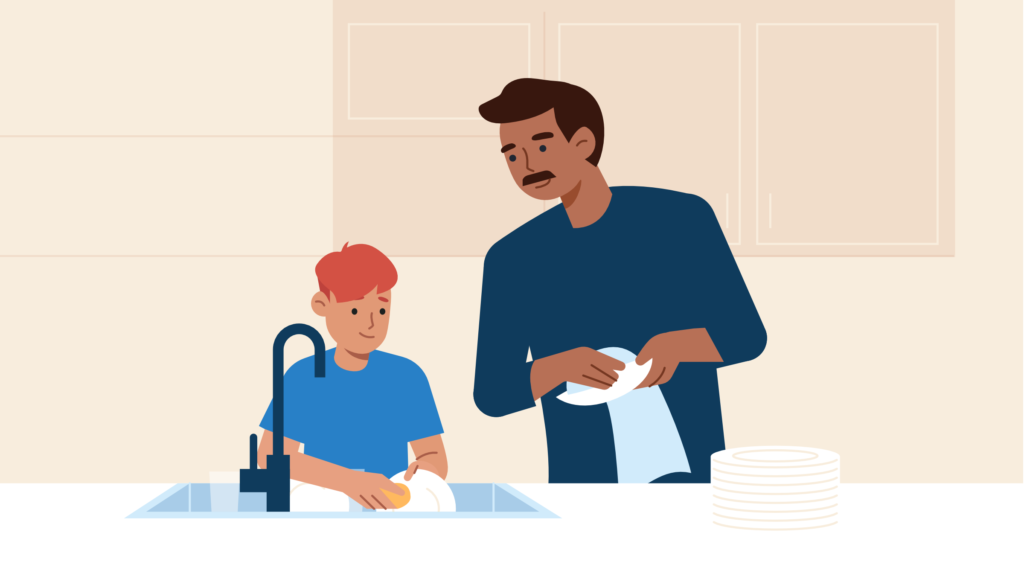
The teenage years can be challenging for both parents and adolescents.
Children who once shared almost everything with their parents may suddenly become more private, independent and selective about what they discuss. For parents, this change can feel like rejection. For adolescents, however, wanting more independence is often a normal part of growing up.
During this stage, trust becomes especially important. Adolescents need guidance, but they also need to feel respected and heard. Parents need to know that their children can make responsible decisions, while adolescents need to believe that their parents will support them when they make mistakes.
Building that trust does not happen overnight. It develops through everyday interactions, consistent communication and mutual respect.
What Trust Really Means
Trust does not mean giving adolescents complete freedom without boundaries.
Instead, healthy trust means creating a relationship where both parent and child can communicate honestly.
An adolescent should be able to say, “I made a mistake,” without immediately fearing humiliation or rejection.
Likewise, parents should be able to establish reasonable rules and expect them to be followed.
Trust works in both directions. Parents demonstrate that they can be trusted, while adolescents gradually demonstrate that they can handle increasing responsibility.
Listen Without Immediately Judging
One of the most powerful ways parents can build trust is by becoming better listeners.
Adolescents may sometimes share opinions or experiences that parents disagree with. The instinct may be to interrupt, lecture or correct them immediately.
Instead, try listening first.
Ask questions such as:
- “What happened?”
- “How did that make you feel?”
- “What do you think you should do?”
- “What would you like me to help you with?”
Listening does not mean agreeing with everything your adolescent says. It simply shows that their thoughts and feelings are worth hearing.
When young people feel heard, they are often more willing to listen in return.
Keep Your Promises
Trust is built through consistency. If a parent promises to keep something private, they should avoid sharing it unnecessarily. If they promise to attend an important event, they should make every reasonable effort to be there.
Repeatedly breaking promises can teach adolescents that their parents’ words cannot be relied upon.
Parents are human and will sometimes disappoint their children. When that happens, acknowledging the mistake can actually strengthen trust.
A simple, “I’m sorry I didn’t keep my word,” can demonstrate accountability.
Respect Their Growing Independence
Adolescents are no longer young children, but they are not yet adults.
They need opportunities to make decisions and experience appropriate consequences. Parents can gradually give adolescents more responsibility with things such as managing personal schedules, making certain choices about hobbies, organizing schoolwork and learning how to manage money.
This does not mean removing supervision. It means allowing independence to grow alongside responsibility.
The more responsibility an adolescent demonstrates, the more freedom parents can reasonably provide.
Set Clear and Consistent Boundaries
Trust does not replace boundaries. Adolescents still need structure and guidance. Clear expectations around school, technology, friendships, household responsibilities and safety can help them understand what is expected.
However, rules are more effective when adolescents understand the reasons behind them.
Instead of simply saying, “Because I said so,” parents can explain the purpose of a boundary.
For example:
“We have a time limit for your phone at night because getting enough sleep is important for your health and schoolwork.”
Clear explanations can make rules feel less arbitrary.
Avoid Using Their Vulnerabilities Against Them
When an adolescent shares something personal, parents should treat that information carefully. Using a child’s previous confession as ammunition during an argument can seriously damage trust.
Statements such as “Remember when you told me you were struggling with this?” may make adolescents regret opening up.
If a young person shares something sensitive, parents should focus on helping rather than collecting information that can later be used against them.
There may be situations where a parent must involve another trusted adult because of safety concerns. But even then, it helps to explain why that step is necessary.
Make Time for Connection
Trust is built during ordinary moments. Parents do not always need a serious conversation to strengthen their relationship with an adolescent.
Cooking together, taking a walk, watching a film, sharing a meal or running an errand together can create opportunities for connection.
Sometimes adolescents are more comfortable talking when they are doing something else rather than sitting across from a parent for a formal conversation.
Small moments of connection can make difficult conversations easier later.
Correct Without Constantly Criticizing
Every adolescent will make mistakes. Parents have an important role in correcting harmful behaviour, but constant criticism can make young people feel that nothing they do is good enough.
Try to distinguish between the behaviour and the person.
Instead of saying:
“You’re irresponsible.”
Say:
“You didn’t complete the responsibility we agreed on. Let’s talk about what happened.”
The second approach addresses the problem without attacking the adolescent’s identity.
Admit When You Are Wrong
Parents sometimes believe that apologizing will weaken their authority.
In reality, a sincere apology can strengthen respect.
If you shouted unnecessarily, misunderstood a situation or made an unfair accusation, acknowledge it.
You can say:
“I was wrong to speak to you that way. I was frustrated, but that doesn’t make it okay.”
This teaches adolescents that accountability is not a sign of weakness.
It also gives them an example of how healthy adults handle mistakes.
Don’t Compare Them With Other Children
Comparisons can quietly damage the parent-child relationship. Statements such as “Why can’t you be more like your brother?” or “Your friend is doing much better than you” may create resentment rather than motivation.
Every adolescent has different strengths, challenges and developmental patterns.
Focus on their individual progress.
Ask:
“What do you think you could do differently next time?”
This encourages self-reflection instead of competition.
Be Curious About Their World
Parents may not understand every trend, app, interest or social issue their adolescent cares about.
Instead of immediately dismissing unfamiliar things, ask questions.
“What do you like about it?”
“How does that app work?”
“Why is this important to you?”
Showing genuine curiosity communicates respect.
It also gives parents a better understanding of the influences shaping their children’s lives.
Give Them Room to Make Safe Mistakes
Part of growing up is learning through experience. Parents naturally want to protect their children from every disappointment, embarrassment and mistake. However, constantly solving every problem can prevent adolescents from developing independence.
When the consequences are safe and manageable, allow them to experience them.
If an adolescent forgets an assignment, for example, a parent does not always need to immediately contact the teacher.
Sometimes the better lesson comes from allowing the young person to take responsibility and learn from the experience.
Know When Privacy Is Appropriate
Adolescents need reasonable privacy. That might include having private conversations with friends, keeping a personal journal or having some control over their personal space.
However, privacy does not mean complete secrecy.
Parents should remain attentive to significant changes in behaviour, emotional wellbeing, friendships, school performance or safety.
The goal should be to balance an adolescent’s growing need for independence with the parent’s responsibility to protect them.
Trust Takes Time
Parents should not expect one conversation to transform their relationship with an adolescent.
Trust is built through repeated experiences. Every time a parent listens instead of dismissing, keeps a promise, respects appropriate privacy, apologizes after making a mistake or creates space for honest conversation, they are adding another brick to the foundation of trust.
And when trust is damaged, it can often be rebuilt through patience, honesty and consistent behaviour.
Final Thoughts
Building trust between parents and adolescents requires more than rules and discipline. It requires communication, patience, respect and a willingness to understand the changing needs of young people.
Adolescents need parents who can provide boundaries without making them feel controlled, guidance without constant criticism, and protection without denying their growing independence.
Parents will not always get it right. What matters is the willingness to keep learning and reconnecting.
The goal is not to raise adolescents who are afraid of their parents. It is to raise young people who know that even when life becomes difficult, home remains a place where they can find guidance, honesty and support.